Last week, Carey Gillam published a story titled – Top scientist booted from research institute, Concerns about chemical industry influence in ouster.
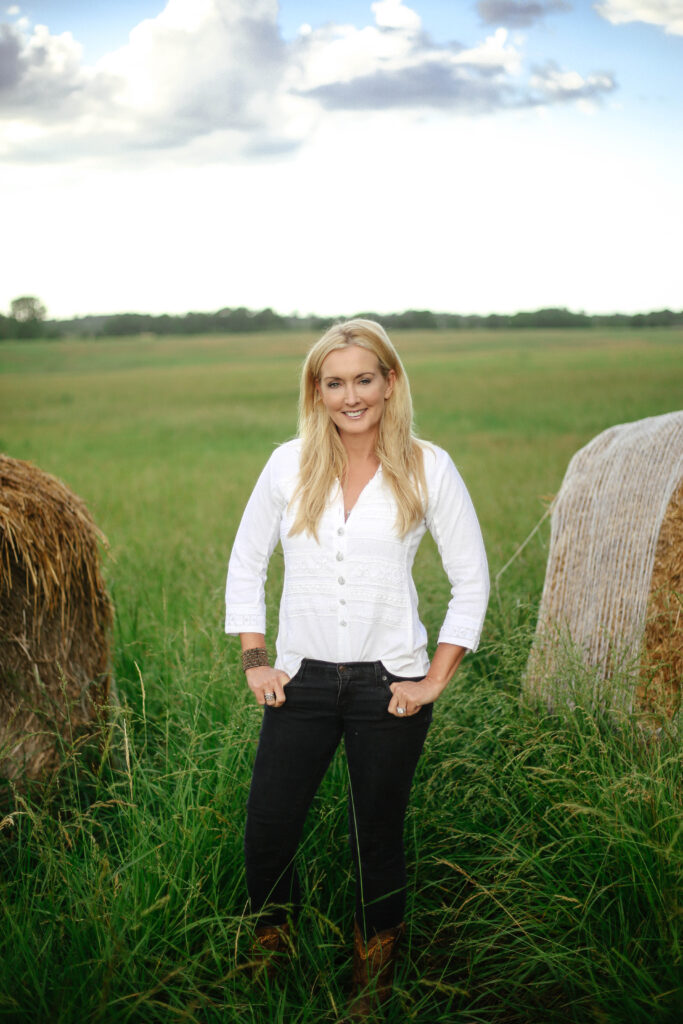
In it, Gillam reports that Daniele Mandrioli, the chief scientist overseeing a sweeping multi-pronged study of the safety of glyphosate, a widely used weed killing agent used in Roundup, was ousted from the Ramazzini Institute Cesare Maltoni Cancer Research Center near Bologna, Italy.
The research center was in the midst of conducting a “Global Glyphosate Study” aimed at exploring the effects of exposures to glyphosate herbicides at “current real-world levels” on several toxicological endpoints. This study was done without chemical industry funding, sponsored instead by “worldwide crowdfunding.”
Gillam reports that other scientists associated with Ramazzini are outraged at the dismissal of Mandrioli, and are questioning assertions by Ramazzini Institute President Loretta Masotti that the termination was not due to pressure from the chemical industry.
“Dr. Mandrioli has been subjected to vicious attacks by the chemical industry because the findings of the Institute’s independent research have cost these companies money and hurt their bottom line,” Dr. Philip Landrigan, head of the International Scientific Advisory Committee of the Ramazzini Institute, wrote in a January 21 letter to Masotti.
Gillam is the author of two books – Whitewash: The Story of a Weed Killer, Cancer, and the Corruption of Science (Island Press, 2018) and The Monsanto Papers: Deadly Secrets, Corporate Corruption, and One Man’s Search for Justice (Island Press, 2021).
She currently runs The New Lede, which is the journalism initiative of the Environmental Working Group.
“This happened at the Cancer Research Center of the Ramazzini Institute near Bologna, Italy,” Gillam told Corporate Crime Reporter in an interview last week. “It has been there since 1971. It’s a toxicology research center and has studied over 200 substances. They do animal studies. Their work is used to inform regulatory bodies. They work a lot with European regulators and U.S. regulators.”
“Like the International Agency for Research on Cancer (IARC), they decided it was important to look at glyphosate. A few years ago, they launched this global glyphosate study to look at carcinogenicity but also other impacts glyphosate might have. This was done under the director of the Institute, Daniele Mandrioli. Daniele has been there for many years. He has been pretty outspoken on what he has seen from glyphosate and he was not shying away from discussing the result. Last summer, they issued a report that strengthened evidence that glyphosate herbicides, at doses that regulators consider safe, cause tumors in these animals and could be causing cancers in humans.”
“Previously, they published a study showing that glyphosate could have endocrine and reproductive impacts. These sorts of studies and discussion of them have been met by Bayer and others in the industry with outrage and attacks. The director has been under intense pressure. And the story I wrote recently was that the director was told to leave the institution by the end of December 2025. He’s been finishing up some work in January and will depart at the end of January.”
“This caused particular outrage because the advisory board to the research center was not consulted. And a number of other important academics involved with the research center were not consulted. They have sent letters trying to save his job, arguing this threatens the independence of the institution and the research center.”
Aren’t there other instances like this where people studying the health effects of glyphosate have been pushed out?
“There have been so many. It’s very similar to what happened to the IARC scientists. After they came out with their classification of glyphosate, they were accused of publishing junk science, of manipulating the results, of intentionally misguiding the findings.”
“They went after the scientists personally, attacking their integrity and credibility. They sent subpoenas trying to get personal emails. The industry pushed the World Health Organization to retract the IARC findings. They pushed for a Congressional investigation into IARC. They pushed to get funding stripped from IARC. A House committee got involved and Republicans held an investigation and lobbed all sorts of insults at IARC. It became a very big deal and left a tarnish on IARC because of its glyphosate work.”
“And you saw that with independent scientists as well – scientists at the University of Washington have had attacks launched at them. It’s not surprising to me anymore, but it still surprises scientists who maybe haven’t studied glyphosate before.”
What’s going on with the glyphosate litigation?
“In 2015, glyphosate was classified as probably carcinogenic to humans by the International Agency for Research on Cancer (IARC), which is part of the World Health Organization. That classification triggered an avalanche of litigation in the United States brought by people suffering from non-Hodgkins lymphoma. They blamed their disease on exposure to glyphosate herbicides such as Round-Up and other brands made by Monsanto.”
“Close to 200,000 lawsuits were filed in the United States. Monsanto was wisely sold off to Bayer, just as the very first trial was beginning in 2018. Bayer has so far paid out over $11 billion in settlements and jury verdicts and is working diligently to try and put an end to the litigation through many different tactics.”
“One new move is that Bayer has successfully gotten the Supreme Court to take up an appeal they have filed in the Roundup litigation. Bayer argues that there should not be any state based failure to warn claims allowed against Bayer or other similarly situated companies because those claims are pre-empted by federal law. Bayer is arguing that the Environmental Protection Agency is the chief regulator over pesticides. And since the EPA does not require a cancer warning on the label, then no one should be able to sue Bayer for failure to warn of a cancer risk. That question will be presented by the U.S. Supreme Court this spring and we can expect a decision by June.”
“Bayer is very hopeful and has told its investors that if they get a favorable ruling this could significantly block future litigation and put an end to current litigation.”
How many such cases have been settled and how many are still on the runway?
“There were close to 175,000 cases filed and there are about 50,000 to 60,000 cases left according to Bayer.”
What do they settle for?
“There was a mass settlement that took a lot of cases out of play. And of course the settlements are confidential. I’ve talked to many plaintiffs who wind up with not very much money at all. Some wind up with $50,000 or $100,000. Other people got a few million dollars. People who don’t get a jury verdict in their favor typically are not going to go home with much more than $1 million if even that.”
How many have reached a jury verdict?
“Dozens and dozens. Bayer has won several. The plaintiffs have won several. Many have settled on the eve of trial or just as the trial was getting under way.”
“There have been many high profile cases that ended in very large jury verdicts. There was the first jury verdict for $289 million in 2018. That was followed by a $2 billion verdict. Another man walked away with $80 million. So there have been some very high profile verdicts. And then there have been a smattering of smaller verdicts.”
Who are the lead plaintiffs firms in this area?
“The Roundup litigation was led by The Miller Firm in Virginia. Robin Greenwald of Weitz Luxenburg was one of the chief architects. Aimee Wagstaff of the Wagstaff law firm was also involved. And then Brent Wisner in California. He was brought in at the last minute to help try the very first Roundup case. He has made a name for himself. And there is now a Netflix movie that is being made about Brent Wisner and the Roundup case. It really did become a global phenomenon.”
Were you involved with the Netflix movie?
“My book was not part of the movie, but I’m in conversations with some of the people involved.”
You wrote an article that was published in The Guardian earlier this month titled – Pesticide industry ‘immunity shield’ stripped from US appropriations bill Democrats and ‘make America healthy again’ movement pushed back on the rider in a funding bill led by Bayer. Tell us about that.
“One of the other strategies that Bayer has been pursuing to make this round of litigation go away and to block future cases is taking this pre-emption argument and trying to get it embedded into federal and state law,” Gillam said. “They are trying to lobby lawmakers that there should be these provisions in federal and state law. They’ve already passed it in two states and are moving forward in other states. The laws say that the EPA is the ultimate authority and there can’t be any state failure to warn claims brought against them.”
“And the lawyers who I talk to say that the failure to warn is the linchpin of these lawsuits. There are many claims made in these lawsuits – design defect, negligence and breach of warranty – but if you don’t have failure to warn as the foundational claim, the others kind of fall apart because they build on that failure to warn claim. So if you cannot sue on failure to warn, you might not be successful.”
“Bayer has formed a group called the Modern Ag Alliance to bring in dozens of other Ag groups from around the country. And they are arguing that if they don’t get these laws passed, glyphosate might be in danger, Bayer may not be able to sell glyphosate anymore because of the cost of this litigation. Companies like Syngenta are facing similar litigation threats from paraquat. The industry paints these plaintiffs attorneys as exploiting people who are suffering from cancer by bringing claims that have no scientific validity. And the companies say they need protection from these predatory law firms that are exploiting these poor people who are suffering from cancer.”
“And the companies are making headway on Capitol Hill. We are expecting to see some kind of language in the upcoming farm bill.”
You report that the Make American Healthy movement was instrumental in stripping the immunity provision out of one of the Congressional bills.
“The MAHA people I talk to have been extremely frustrated with the Trump administration, EPA chief Lee Zeldin and even Bobby Kennedy, their leader. The MAHA activists are not seeing the kinds of changes they wanted with pesticides and environmental chemicals.”
“They are seeing the same old song from the EPA – which is, we are going to bend over backwards to protect these companies and protect their interests and their products. When Bobby Kennedy was appointed as Secretary the Department of Health and Human Services and they put together their first draft MAHA report last spring, it named glyphosate and atrazine and talked about how dangerous they could be and talked about the need for more rigorous regulation. But then the agrichemical companies went to Capitol Hill, held all sorts of meetings and when the final report came out in the fall of last year, it made no mention whatsoever of those pesticides.”
“So MAHA is very frustrated. They launched a petition to try and remove Lee Zeldin. They are calling for his ouster at the EPA. There are a lot of meetings going on back and forth. Lee Zeldin is trying to appease MAHA, but without doing anything substantial to rein in these pesticides.”
[For the complete q/a format Interview with Carey Gillam, 40 Corporate Crime Reporter 5(12), February 2, 2026, print edition only.]