On June 10, 2025, Public Citizen put out a press release titled – Department of Justice Won’t Prosecute Corporate Bribery Schemes Overseas.
Covington & Burling
Washington, D.C.
Not so fast.
On November 10, 2025, the Department entered into a deferred prosecution agreement under which the company – TIGO Guatemala, a unit of Millicom – will pay $118 million to settle bribery allegations under the Foreign Corrupt Practices Act (FCPA).
The case garnered little mainstream press attention. One reason: the Justice Department didn’t put out a press release on the case.
Why not? The Department says it had to do with personnel issues raised during the government shutdown.
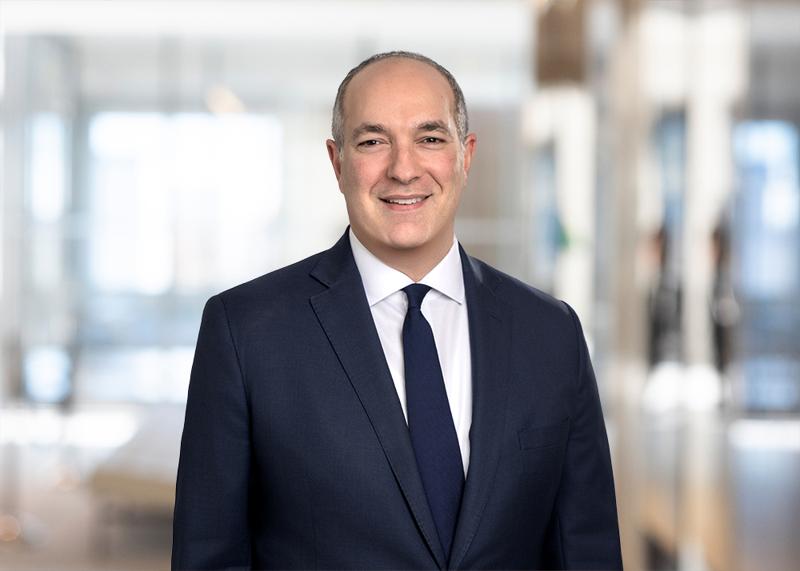
Daniel Suleiman is a partner at Covington & Burling in Washington, D.C. Suleiman represented the company in the case.
How has the corporate criminal defense practice changed under the second Trump administration?
“That chapter is still very much being written,” Suleiman told Corporate Crime Reporter in an interview last month. “Although sometimes it feels like longer, only ten months have gone by. In part, there is a personnel issue. Many people have left the Department. And that creates an impact. It takes time for policy priorities to trickle down. There are investigations that were initiated by the prior administration and they are still underway. That is natural and that is how it is in every situation. Those cases over the natural course will eventually come to an end. The question is – what are these cases going to be replaced with?”
“The FCPA is a great example. There are a number of FCPA prosecutors who are no longer at that unit. And there have been significant policy pronouncements about which types of cases they intend to pursue. They have made some statements about other types of corporate crime they intend to pursue. But I don’t think those new policy initiatives have been executed yet.”
Many liberal activists proclaim that Trump has shut down FCPA enforcement. For example, Public Citizen released a report titled – The Department of Justice Won’t Prosecute Corporate Bribery Schemes Overseas.
But you just represented Millicom in an FCPA case that was just resolved. What do you make of this rhetoric on the left that the Department is not going to prosecute FCPA cases?
“I don’t know what to make of the rhetoric itself. We have seen a number of cases closed without action recently. But looking at what the Department has said, it is really quite fascinating. When I was in the Department between 2010 and 2013, arguments continued to be made at that time that the FCPA was harming US business interests. That was an argument that had been made for decades. But particularly in the 2000s and 2010s, it appeared that that argument had been laid to rest. FCPA enforcement during that period was robust. Defense side arguments to that effect had not prevailed.”
“But in these new Department policies, that argument has not only been resuscitated, but enshrined in an executive order and in a Department Attorney General memo. The real thrust of these documents is – if these investigations and prosecutions are going to harm U.S. business interests, the documents appear to say that those cases will not be pursued. And the focus will be on cases that threaten U.S. national security, that involve cartels and transnational criminal organizations and that otherwise disadvantage U.S. business interests.”
“In a way, we’ve gone back to arguments that had been made and rejected. Those arguments have now prevailed.”
How do you see the prosecution of Millicom fitting into that dynamic?
“The Millicom case began as a voluntary disclosure in 2015. And then – as is laid out in the papers – the Department of Justice gained new information in or around 2020 and reopened the investigation. The company disclosed the receipt of a subpoena in the spring of 2022.”
“Like many other investigations that are being resolved, the case began several years ago. That’s an important factor. When you are evaluating corporate resolutions as they come forward, it’s important to understand when they began.”
“Any administration can come in and say – this is our priority – whatever it is. But particularly complex white collar investigations cannot be completed shortly after the policy pronouncement is made. It just takes time to serve documents, to analyze the accounting, to get the documents that are often overseas, to interview people – that can’t be done within a short period after the policy pronouncement is made.”
This is a pure bribery case with cash being paid to government officials for favors. Other similar cases have been closed out, even cases started long ago. Why did this one get resolved and not closed out and the others didn’t?
“You could ask the people at the Department that question. It is not a U.S. company. There is a reference in the settlement papers to certain drug trafficking dollars. That may have contributed to it. But I am certainly not the decision maker, so that is probably best posed to the Department.”
This was a major $118 million settlement. FCPA cases get most of the corporate crime reporting in America. But given everything that has been written about Trump’s policy on bribery, why no reporting on this? The Wall Street Journal, the New York Times, the Washington Post – not reporting on this. Any sense as to why so little business reporting on this major settlement?
“You are in the media. I would ask you that question. I have no idea. The case became public on November 10 while the shutdown was still going on. That may have contributed to it. But I really don’t know.”
The Justice Department did not put out a press release in this case. Usually, for this size of case, they would put out a press release. The Justice Department said it had to do with the shutdown and staffing. But they were putting out press releases during the same time about much less significant cases. They put out a lot of press releases during the shutdown. But it fell through the cracks for one reason or another.
But back to the case – talk about the details and how it was resolved.
“The company voluntarily disclosed the matter in 2015 to the Department and Swedish authorities. Both closed their investigations, the Department in 2018. And then the case was reopened in 2020, according to the papers. And the company received a subpoena in 2022. The conduct that is covered goes from about 2012 to 2018 at a subsidiary of Millicom over which it lacked operational control until buying out its local partner in 2021.”
“The case was resolved through a two year deferred prosecution agreement, which is less than the standard three year term for deferred prosecution agreements.”
“The company achieved a fifty percent discount off the bottom of the guidelines range, which is the highest available under the applicable Department policy. And as far as we can tell, it’s the greatest discount ever awarded to a company since the Department began formalizing its policies in this regard. With the fifty percent discount, there is a $60 million criminal penalty and $58.2 million in forfeiture, leading to a $118.2 million resolution.”
“Importantly, in this case the company was recognized for voluntarily disclosing in 2015, but also for its exceptional cooperation in the investigation. It’s also explicitly recognized for its very extensive remediation and the building out of a top notch compliance program. No monitor was imposed. And the two year term is another recognition that the company has come a long way in these last ten years – including in the last three years. All of that is recognized explicitly in the resolution.”
The Trump administration says that it has closed out over half of its open investigations initiated under the Biden administration. Does the administration tell the public when it closes out investigations? Is there a list that the Department puts out?
“I don’t know that the Department puts out a list. Typically, the company will disclose it when they receive a declination letter. If it is a public company and they have disclosed the existence of an investigation or that the investigation is ongoing, then when they receive the news that their case is being closed, they will invariably update their disclosure that the case has been closed. That’s the principal way in which this kind of information becomes public. There may be situations where a matter hasn’t been disclosed and then the investigation has been closed. We may not find out about that. It is not typical Department practice to announce when a matter has been closed.”
“There have been three to five cases where they have been publicly closed since the new administration took over.”
It has been the Department’s practice to announce resolutions. In the Millicom cases they didn’t. Do you have a sense of what the universe of non announced resolutions looks like?
“I do not. They almost always announce these cases. I’m not sure I’m familiar with another situation where they haven’t. But some years ago, the Department undertook an effort to improve its transparency in these types of cases. They began cataloging all such resolutions on the FCPA Unit’s website. And you can sort the cases chronologically. You can view them all. They try to explain the logic of the resolution within the settlement papers to try to give companies a little bit more insight into the types of actions they credit and don’t credit. All the resolutions are always available on that web site, regardless of whether they announce them. But they almost always announce them too.”
When we started this publication forty years ago, prosecutors would bring a corporate criminal case to either a guilty plea or trial. Now the practice has shifted to where the dominant outcome is a settlement with a deferred or non prosecution agreement.
What do you make of that shift in practice over those forty years?
“A guilty plea for a corporation is a big deal. I represented a corporation last year that did plead guilty. But in certain regulated industries, a guilty plea can be a fatal deal. The deferred prosecution agreement as a concept allows companies to be held accountable. Sometimes they carry with them significant financial penalties or a corporate monitor – many of the things that a guilty plea can achieve without the stain of a felony conviction of the company as well. And that conviction is often not needed for a corporation. Corporations can’t go to prison.”
“These types of resolutions allow for accountability for corporations and there isn’t a need for a guilty plea for these kinds of cases. They don’t add that much. There are certain situations where the government for whatever reason may insist upon a guilty plea. And perhaps in that industry the collateral consequences are not so severe that the company can survive and thrive even after the guilty plea. But from my perspective, it’s a more nuanced type of resolution and therefore a net positive.”
Would you say that a non prosecution agreement is even more nuanced and even more of a net positive?
“No. I was trying to draw a distinction between a more binary situation of a guilty plea or nothing. As between a non prosecution agreement and deferred prosecution agreement, of course a non prosecution agreement is superior from the company’s perspective. You don’t have a charge that is actually filed in that situation. There is no charge in court that is being deferred.”
“I wouldn’t say it’s a more nuanced resolution. It is a more lenient resolution than a deferred prosecution agreement and therefore preferable from a company’s perspective.”
Corporations want to avoid a guilty plea at all cost because it is reputational damage. Deferred prosecution agreements avoid that. You do a lot of pro bono work representing indigent clients facing the criminal justice system. In our final minutes here, let’s address what many perceive to be the two-tiered system of justice – one for individuals and one for corporations. It just seems like individual street criminals are treated much more harshly than corporate criminals. You represent both. I get it’s a tricky situation for you because your major clients are corporations.
But could you give us some insight into this perception of a two tiered system of justice?
“You are saying there are two tiers between corporations and individuals. I hear it more about indigent individuals and individuals who can afford higher priced counsel.”
“I personally don’t think of our system being two tiered – one for corporations and one for individuals. There is no doubt that when you are in state court in a violent crime case, that is the true trenches of the criminal justice system. And it’s deeply important for people to be well represented in those situations. Everybody deserves a defense – and it’s important to the functioning of the criminal justice system.”
“From my point of view, a corporation just stands in fundamentally different shoes from any individual who is being put through a prosecution because a corporation is comprised of thousands, tens of employees and other individuals who may have had absolutely nothing to do whatsoever with the conduct that is under investigation, which may have taken place at a subsidiary or may have taken place at a particular unit.”
“And you can’t put a corporation in prison. In some ways, comparing individual prosecutions in violent crime cases to corporate criminal enforcement is comparing apples and oranges.”
[For the complete q/a format Interview with Daniel Suleiman, see 39 Corporate Crime Reporter 48(12), December 15, 2025, print edition only.]