Bloomberg News calls Paul Fenn the utility industry’s number one enemy.
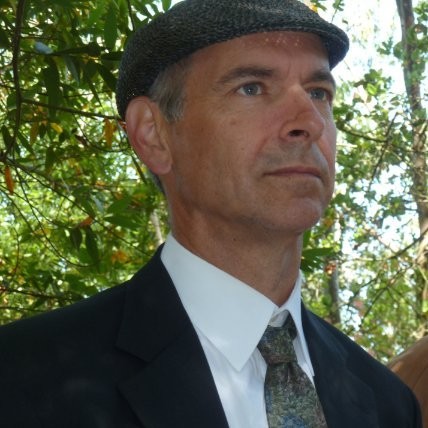
He’s a political philosopher who can talk in detail about the Austrian political activist Otto Bauer, about Nobel Prize winning economist Ronald Coase and carbon trading – and then move directly to dissecting the fallout from electricity deregulation and what citizens can do to regain their power over energy markets.
He’s the founder of a group called Local Power that has led the development of a new community-based model for energy called Community Choice Aggregation (CCA).
Fenn is also the creator of Green Bonds to finance local build-outs.
CCA is authorized in half of the U.S. energy market with 50 million Americans offered service by over 1800 municipalities. Sixty percent of Americans buying renewable energy voluntarily are CCA customers.
The CCA 2.0 model in California has invigorated every U.S. utility in the scale and speed of renewables development. Virtually every community in this country with 100% renewable energy is a CCA 2.0 program, and Green Bonds are a trillion dollar industry worldwide.
Fenn is now onto CCA 3.0 – a local Green New Deal.
He’s the author most recently of The Localist Manifesto.
Give us the five minute nutshell of your emergence into electricity regulation and what you tried to do.
“At the University of Chicago, I studied the Austrian socialists and how they were doing politics and compared it to the way the German socialists were doing politics,” Fenn told Corporate Crime Reporter in an interview in November 2025. “The unions were becoming proto-fascist. I was interested in the evidence that fascism was coming to America. This was 1992. I grew up feeling it, partly because I grew up in a trailer park.”
“I had an encounter with an economist in Chicago – Ronald Coase – who had originated the theory of pollution credit trading. This was the beginning of carbon trading. It’s the neoliberal mechanism for dealing with pollution, dealing with climate change. I did not know much about neoliberals at the time, but did recognize at the time that there was something really sick about it. And it resembles some of the dynamics that caused fascism to arise in Europe.”
“Carbon trading is a madness inducing idea. The idea was that you could solve the world’s pollution problems by selling the right to pollute the atmosphere and turning that into a market. There is an insanity in that idea. Markets cause climate change. Instead of doubting markets and saying — we need to rein in industrial pollution, instead we need to turn to the markets to solve the problem. Let’s turn the sky into a market.”
“I turned to this professor. I met with him and told him that he reminded me of these Hungarian communists I had been reading who became collaborators with Stalin. There was this economist – Gyorgy Luckas, who had this theory that the commodity form was this powerful structure that overcame class consciousness, for money you could buy a human being, a kidney, everything becomes commodified, and takes over the consciousness of people.“
“And I said to Coase – you have a similar theory, you want to commodify the sky, instead of being conscious of the meaning of climate change, time’s up and something needs to end right now, turn off the coal plants. Doesn’t that make sense? Turn them off. Doesn’t that make sense? No. What makes sense is – sell the atmosphere.”
“I told Coase – you remind me of this Hungarian economist. Coase had done all of this work in the 1950s. But by the time I met him, he had turned on his own theory. But the Chicago School had co-opted him and turned him into their mascot. He couldn’t escape them. And the year after I met him, he got the Nobel Prize for economics for his work in this field.”
He rejected his own theory and he agreed with you?
“Yes, he agreed with me. He was British and he had that great old tradition of not just defending your own work, but questioning your own work and being interested in the truth. He was a virtuous scholar. He wasn’t at all defensive. He encouraged me.”
Are you saying that things like carbon trading led to Trump?
“In a way, yes. I’m saying that neoliberalism certainly did. And carbon trading was the part of neoliberalism that both parties embraced fully.”
When I type into Google – Ronald Coase rejects carbon trading – it comes back with – he did not reject carbon trading but rather his theory provides a framework for understanding it.
“He didn’t reject it publicly.”
But he rejected it when you spoke with him?
“He was 90 years old when I met him. He had done his work in the 1950s. He said – I am essentially hostage to the Chicago school of economics. He said to me – I did this work in the 1950s and they turned this into a core platform, but I myself don’t think it works. He agreed with me. And he gave me a tip. He said – this was all going to be played out in the restructuring of the electricity industry. He said – if you really wanted to get in the middle of what he called the holy war, you should get involved in electricity deregulation.”
“He said it’s going to start in Massachusetts, it’s going to go to California and then spread throughout the country. He knew all of this. He was a Brit and knew that deregulation was brought to the United States by the Thatcher government through Reagan. And it was being filtered through Harvard and Stanford and all of these elite institutions. He said it would be passed in California and Massachusetts as a model and then replicated in all of the other states. And that’s what happened.”
“I’m from California and my wife Julia is from Boston and her uncle had just left office. I thought – I got to do this. I took the leap. I worked for the 1992 Nader campaign. Matthew Rothschild from the Progressive magazine worked on that campaign. The campaign made these giant “Write in Ralph” pencils. I drove around with Ralph, watched him give his brilliant speeches. They kept him out of the debates. I got to see what a sham that was.”
“Then for a year I got temp jobs and then went to the library and read about electricity regulation, about which I knew nothing. I had the benefit of knowing Michael Dukakis and he told me who to talk with. I went around to the law firms in Boston, started learning about what’s going on. I learned about this state Senator who had just been elected and was appointed to chair the energy committee – Mark Montigny from New Bedford.”
“I went and volunteered for him for a few months. I wrote him some white papers and got hired as his legislative aide. I then became the director of the Senate Energy Committee.”
“To my surprise, I found myself in the middle of the electricity restructuring process. I was on the Governor’s task force. I was talking with the utility CEOs, the Governor’s guy, the Conservation Law Foundation and other stakeholders. They were meetings of ten people who brokered the whole thing. I was at that table for a couple of years.”
“I didn’t tell them why I was there, which was to go back to Otto Bauer, the Austrian who had this idea of what I called positive dialectics. Rosa Luxembourg set up these schools of socialists and they tried to retrain the workers to get them to transcend their racism, which I recognized as a totally futile exercise and quite dangerous.”
“Instead of telling the trade union racists that they had false consciousness, Otto Bauer said – these Hungarians are here in Austria because they are being displaced by the same corporate masters that are repressing you. You should accept them into the union so that they can gain the political power to go home. Not that you should embrace them and accept them and make them part of your world, but that you should help them return to your world. I thought that was brilliant.”
“So when Margaret Thatcher started pushing deregulation, I wanted to come up with a positive dialectic to deregulation – an actual alternative. And I came up with – local democracy controlling electricity supply. Instead of having individual consumers choosing you would have communities choose. That was the concept I had.”
“I wrote this bill but didn’t tell anybody about it. Deregulation was a conspiracy. It was not a discussion. It was Enron and their group coming in with lots of money and getting the utilities to agree to it in return for bailing out the nuclear power plants. That’s what it was. It was pushed by large industrial customers like Raytheon in Boston. They wanted cheaper power. They wanted to be able to break away from the utilities and get cheaper power from the Enrons of the world. That is what deregulation was about.”
“My bill was very left wing compared to the conspiracy. But I worked with a guy named Scott Ridley to draft that bill. And I got my Senator to introduce it. He never actually read it. But a week after it was filed, he was removed from his chairmanship and I was basically fired because everyone was so pissed off by this bill.”
You say that the energy lobbyists felt hurt by your betrayal.
What did the bill do?
“The bill simply said – okay you are deregulating. Here’s another option. If the municipalities want to, they can aggregate the residential and business accounts in their jurisdictions, enroll everybody on an opt-out basis – they can opt out if they want – and then directly negotiate for supply. It was related to Ralph Nader’s big idea back in the 1980s –”
The government buying cars for example and that gives the government the power to dictate safer cars – government bulk purchasing power?
“This was related to that idea. The municipality buys on their behalf and then holds local public hearings to adopt an implementation process. There would be a local process with public hearings to decide how it’s going to work. The government would be procuring on behalf of the whole community.”
What happened to the bill?
“I was fired but a number of towns in Cape Cod that we had recruited led the political movement to pass the bill. And they got that bill passed in the Electric Restructuring Act of 1997. It was adopted.”
“I ended up out west. I heard that the bill passed. Cape Cod formed the first aggregation called the Cape Light Compact. I knew all the people that led the charge for it. But when the thing formed, it was really disappointing because the people on the board weren’t the people who created it. That’s a big problem.”
“For me, the point was to have it controlled by the people who created it, to control the energy supply so as to decarbonize it – choose renewable energy. They didn’t want to do that. They wanted to get a discount. They just repurposed it for a discount and for renewable energy – they bought renewable energy certificates. That’s straight Ronald Coase – renewable energy certificates are like carbon credits. The same neoliberal structure. So I was pulling what little remains of my hair out. I created this instrument and they were just using it to recreate the old world.”
“It was disillusioning. But then I realized I didn’t set up right. So I decided to try a new form in California. I was on my own, no funding. I was back in my hometown of Oakland. Jerry Brown had taken Ralph’s platform after Ralph pulled out of the race and was running in the New Hampshire primary for President. He had moved back to Oakland after that and I started hanging out with Jerry Brown. I got to know Tom Ammiano who had just been elected to the Board of Supervisors in San Francisco. I started pushing my way around Sacramento. Deregulation was coming to California, but I couldn’t get into the process. They were kind of keeping me out. I had a little grant. But I couldn’t get my bill into the California restructuring law. They passed that law, which was a straight deregulation package with no community choice.”
“But I was criticizing it. I was quoted in the articles as the person who said – this is crap. The AP did a story. And both Republicans and Democrats said this was the best thing since sliced bread. Before the crisis happened, I was pointing out how the market was failing.”
“When the crisis happened, that gave me leverage to go back to the legislature to try and get my bill passed, which it did. And it was a new bill that tried to fix the problems with my bill in Massachusetts by setting up a structure where municipalities controlled their supply of energy – they weren’t just going out and picking a supplier.”
How does a public power entity like the Sacramento Municipal Utility District (SMUD) differ from what you set up?
“That’s a municipality that actually condemns through eminent domain the infrastructure of a utility and takes it over. The process usually takes ten to twenty years.”
“My bill was adopted by the legislature in 2002. I started these programs in Marin, San Francisco and Sonoma counties and then in others. Then the utilities ran a statewide constitutional amendment referendum to block my law. I had to run a campaign against that. We defeated them in 2010.”
“It took years to get one implemented. But they started launching in 2009 with the Marin Energy Authority. Today it’s called Marin Clean Energy. And then a bunch of the others followed. And today there are 250 municipalities who do this. They serve 15 million people in California. They are called community choice aggregations. The municipality can get open access to transmission. They can negotiate the supply in California.”
“But I realized that to get climate action they needed to build renewable resources and finance energy efficiency measures. I wrote a revenue bond authority called the Green Bond in 2001. And that was adopted by San Francisco voters. Each of these entities controls hundreds of millions of dollars a year. And they can use that revenue to issue revenue bonds to finance the construction of renewable energy and energy efficiency measures.”
“Those have exploded in California. They have issued $20 billion in Green Bonds as of last year. They issued more Green Bonds than China did in 2024.”
What is the reality on the ground for those consumers where there are these community choice aggregations?
Is the electricity actually cheaper?
“They have done really well. They have underpriced the utilities. You could get legally greener power without paying a premium. Before that, it was a given that if you wanted greener power you had to pay more. The aggregation allowed them to buy greener power and not pay more and often pay less.”
“There are now 2000 municipalities across the country. One out of ten Americans are now served by these aggregations.”
Do you consider that a success?
“Yes and no. The model is incomplete. That’s why I’m still working on it. The goal is climate action. It has to have lower rates if it is going to be viable as a model. You can’t have climate action if it’s going to cost more.”
“Part of the problem with the model in California is that it didn’t involve people enough. The first model in Massachusetts gave control to the market. In California, I gave the municipal governments control and that’s why it’s more powerful. They have a public purpose and they wanted to create public benefits and they did. But they are still bureaucracies. And bureaucracies have their own problems. They are prone to gigantism, wanting to grow, not wanting to shrink.”
“And I realized ten years ago that climate change requires that you shrink. You need to reduce power and energy sales if you want to reduce carbon. You can’t green the supply.”
You are talking now about the so-called degrowth agenda.
“Yes. Degrowth is the essence of climate action.”
Democracy Now is live now from Brazil and the UN Climate Change meeting. What’s your take on the climate change movement?
“They have bought into the idea that everyone should pay more. It’s okay for people to pay more for green energy, not realizing that they are declaring class war on the poor when they do that. They bought into these mechanisms used by utilities. And utility lawyers are clever foxes. They came up with what they call renewable energy solutions – like renewable energy credit trading, which is widely embraced and promoted by most large environmental groups. But all you are doing is buying certificates. You are not buying renewable energy. That’s a lie. It’s fraud on the consumer. But it’s widely endorsed by all of the enviro groups.”
“They also promoted wind farms in rural areas that don’t serve the rural areas. They serve the big cities. You get towns that have big wind farms and solar farms forced on them for industrial infrastructure that does not serve them, that has absolutely nothing to do with them. It sacrifices rural areas for urban energy needs. This causes the reaction that we are seeing today.”
You have written a book titled The Localist Manifesto. You want to go straight to the local municipalities.
“It’s using the state to authorize the municipality to give control to the people. I call it CCA 3.0. CCA is community choice aggregation. Massachusetts was the first state to implement it. That was CCA 1.0. It was just a choice. California was CCA 2.0 – municipal administration. And 3.0 is enabling people to control their energy supply.”
“How do you standardize that idea as an energy model? Instead of buying green power from the grid through certificates, or instead of selling power back to the grid through net metering, you build on site energy systems that give ownership to the user. It isn’t Goldman Sachs or some third party finance company that owns everything, which is pretty much how it works today.”
“Instead, the user is going to be the so-called investor. The municipality will facilitate co-investment by neighbors. And the systems they install will take advantage of technology convergence in energy. Solar panels are 20 cents a watt today when they were $5 a watt in 2010. Renewable heating systems. Ground source heat pumps.”
“When you look at these installed systems now, 70 percent of the costs of these systems are the marketing costs and the engineering costs, not equipment, not labor. You are using the aggregation to overcome that massive, unnecessary cost center for what are called advanced renewables, which are essentially interoperable systems that make an electric vehicle part of a photovoltaic power system and make heating systems into energy storage components of those systems. You have heating, vehicles and power installed in buildings as single interoperable systems that are designed to avoid grid use, to eliminate natural gas pipeline use and gasoline use.”
What towns or cities are there now?
“We are just doing this now. This is right now. I came up with the model. In 2020, I wrote CCA 3.0. I got the state of New York to approve me as a program administrator so I can run the programs in New York. And the town of Ithaca, New York hired me to implement this program. I have been awarded contracts by the city to be the administrator for their aggregation. It will be addressing power, heating, vehicles and waste.”
How long will it take Ithaca to implement this project?
“Maybe ten years. It’s a big deal. It’s penetrating into the built environment. The roofs will be covered with solar panels. The driveways will have electric vehicles powered by those panels. People are sharing vehicle chargers. They might be sharing the vehicles as well, particularly in denser environments. They will be sharing ground source heat pumps, geothermal loops. Heating is a big part of it. Vehicles are a big part of it. For power generation, it’s basically solar everywhere.”
[For the complete q/a format Interview with Paul Fenn, see 40 Corporate Crime Reporter 1(11), January 5, 2026,print edition only.]